Statement Opposing Adoption of Single-Dose “One Is Enough” HPV Vaccination Policy in the United States and Other High-Resource Settings
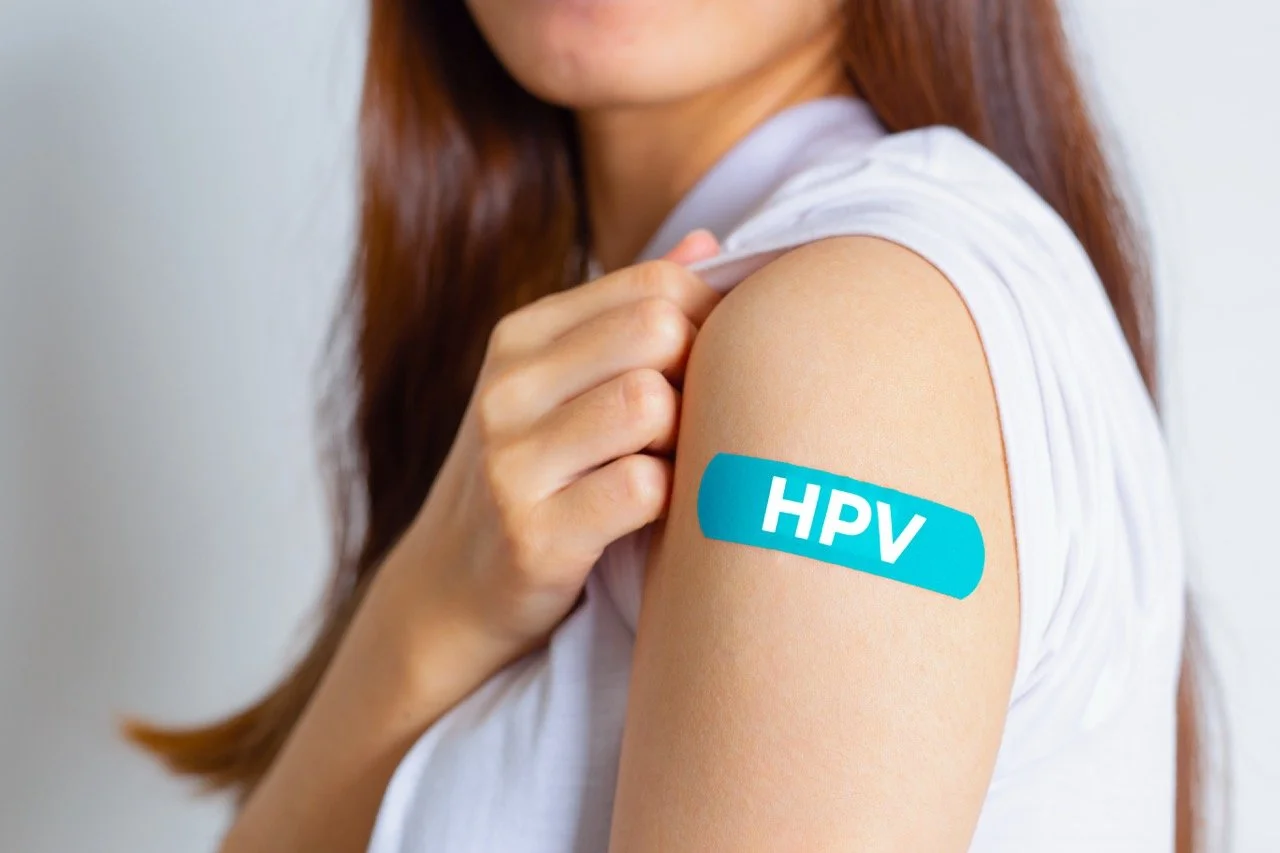
The Recurrent Respiratory Papillomatosis Foundation (RRPF) strongly opposes the adoption of a single-dose HPV vaccination policy as a replacement for the standard multi-dose regimen in the United States and other developed countries with existing multi-dose infrastructure. While RRPF recognizes the global public health value of single-dose schedules in low-resource settings, the evidence supporting “One Is Enough” applies almost exclusively to cervical cancer prevention and cannot be extended to the diseases caused by HPV types 6 and 11 — including recurrent respiratory papillomatosis (RRP), a disease with which RRPF’s community lives every day.
1. The evidence base for single-dose efficacy is narrow, and RRPF’s community falls outside it.
The clinical trials underpinning WHO, NIH, and other bodies’ endorsement of single-dose schedules — including the KEN SHE trial in Kenya and the ESCUDDO trial in Costa Rica — were designed around, and report efficacy for, persistent cervical infection with oncogenic HPV types, primarily HPV 16 and 18. These are the correct endpoints for cervical cancer prevention, but they are not the endpoints relevant to RRP, which is caused by HPV 6 and 11 in more than 90% of cases. No randomized clinical trial has been identified that was designed or powered to assess single-dose efficacy against HPV 6/11 infection or clinical RRP outcomes.
2. Where real-world data exists on HPV 6/11-driven disease, it shows single dose underperforms.
A 2024 systematic review in Vaccines (Bao et al.) examined ten population-based studies assessing single-dose quadrivalent vaccine effectiveness against genital warts — the clinical disease most directly attributable to HPV 6/11 outside RRP. Eight of the ten studies found the greatest reduction in wart risk with three doses and the smallest with a single dose. The review’s authors concluded plainly that “two or three doses of a quadrivalent vaccination were more beneficial than one dose for preventing genital warts.” This is the only body of real-world clinical-outcome evidence available for the HPV types that cause RRP, and it points in the opposite direction from the single-dose cervical cancer findings being used to justify policy change.
3. RRP is a severe, lifelong disease with no cure, and its prevention margin cannot be treated as expendable.
RRP causes recurrent papillomatous growths in the airway that can require dozens or hundreds of surgical procedures over a patient’s lifetime, cause life-threatening airway obstruction, and in rare cases progress to malignancy. Juvenile-onset RRP, the more severe form, typically presents before age 5. There is no cure; treatment is limited to repeated surgical debulking. Given this severity and the absence of any curative therapy, RRPF believes prevention margin matters more, not less, for HPV 6/11-driven disease than for HPV 16/18 — the opposite of what a lower-protection single-dose regimen would deliver.
4. Head and neck and anal cancers face the same evidence gap.
Beyond RRP, HPV is a driver of oropharyngeal and anal cancers, and men are disproportionately affected by HPV-driven oropharyngeal cancer. Unlike cervical cancer, no randomized controlled trial has evaluated single-dose efficacy against oropharyngeal or anal cancer, or against the oral or anal HPV infections that precede them. Existing single-dose evidence is derived entirely from cervical infection endpoints and extrapolated to these other cancers without direct clinical support. Where related data exists — such as a 2023 retrospective study of oral HPV infection in vaccinated women (Gheit et al.) — it found that vaccine-type oral HPV infection could be prevented with two or three doses, but not with one. This is a second cancer-relevant population, beyond RRP patients, for whom “One Is Enough” is an extrapolation rather than an evidence-based conclusion.
5. High-resource countries do not face the access barriers single-dose policy is designed to solve.
The rationale for single-dose schedules — reducing cost, logistical burden, and dropout in multi-dose series — is compelling in low- and middle-income countries where two- and three-dose completion rates are low and where the alternative is frequently no vaccination at all. The United States and other developed countries do not face these constraints at the same scale: multi-dose infrastructure, insurance coverage, and adolescent healthcare access already exist. Adopting a lower-protection regimen in settings that can readily support the full multi-dose series trades away protection margin for logistical convenience that these systems do not require.
RRPF’s Position
Developed countries with functioning multi-dose vaccination infrastructure should maintain the current multi-dose HPV vaccination schedule until randomized clinical trial data specifically evaluating single-dose efficacy against HPV 6/11 outcomes — including RRP, genital warts, and HPV 6/11-attributable disease — and against oropharyngeal and anal cancer are available. Policy should not extrapolate cervical-cancer-specific trial results to diseases and cancers those trials were never designed to measure.
References
Bao W, He X, Huang Y, Liu R, Li Z. The Clinical Effectiveness of Single-Dose Human Papillomavirus Vaccination. Vaccines (Basel). 2024;12(9):956. doi:10.3390/vaccines12090956.
Barnabas RV, et al. Efficacy of Single-Dose Human Papillomavirus Vaccination among Young African Women (KEN SHE Trial). NEJM Evidence. 2022.
Kreimer AR, Porras C, et al. Evidence to Action — Single-Dose HPV Vaccination and Cervical HPV Infection (ESCUDDO Trial commentary). New England Journal of Medicine. 2025.
Estimated incidence of juvenile-onset recurrent respiratory papillomatosis in Korea. PMC. 2021. (HPV 6/11 responsible for >90% of RRP cases.)
Juvenile onset recurrent respiratory papillomatosis: What do we know in 2024? ScienceDirect / Elsevier. 2024.
Can a single dose of the human papillomavirus (HPV) vaccine prevent oropharyngeal cancer? British Journal of Oral and Maxillofacial Surgery, via PubMed. 2020.